


There are neighborhood sights that would stop traffic almost anywhere else in America. Then there are the things that are only in Florida: an alligator treating the swimming pool like a resort, sandhill cranes refusing to surrender the driveway, peacocks patrolling suburban streets and golf carts being used like family sedans.
Some are funny. Some require considerably more distance than others. All have actually been documented in Florida communities.
Here are nine sights that help explain why taking out the trash in the Sunshine State can occasionally feel like entering a nature documentary with an HOA.
Things Florida Residents See in Their Neighborhoods
An Alligator Already Using the Swimming Pool
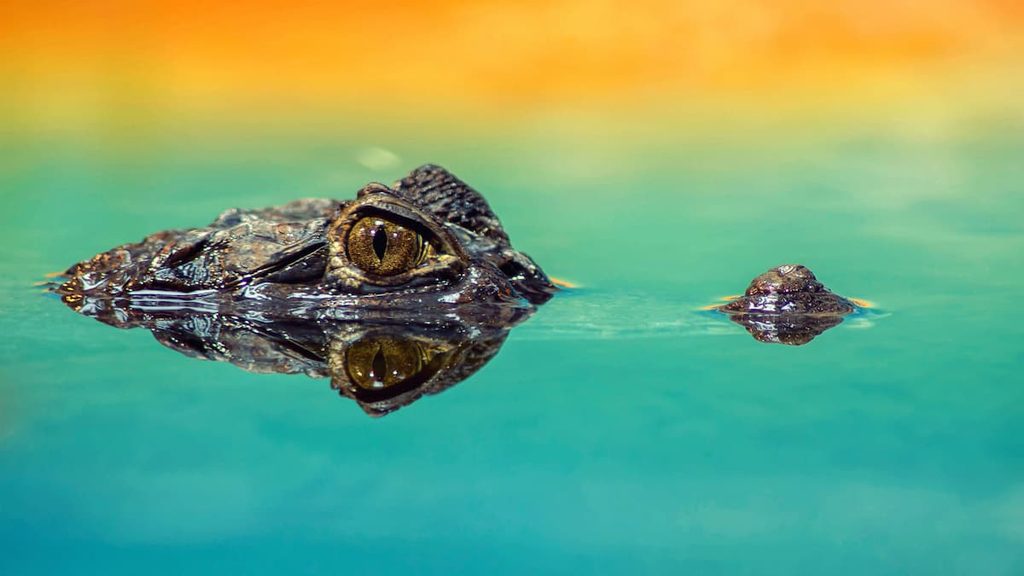
Imagine looking into your backyard and discovering somebody beat you to the pool. Except the somebody has teeth.
A resident in Belle Isle, near Orlando, found an alligator swimming in a backyard pool in May 2026, according to WFTV. Police responded and removed the unexpected swimmer from the neighborhood.
Similar encounters have happened elsewhere around the state, making “check the pool for alligators” one of those sentences that sounds ridiculous until you live in Florida.
There is a reason for that. The Florida Fish and Wildlife Conservation Commission says alligators live in all 67 Florida counties. The agency specifically notes that even smaller gators sometimes end up in unacceptable places including swimming pools and garages.
FWC advises residents not to handle an alligator themselves and to call its nuisance alligator program when one turns up where it should not be.
Iguanas Dropping Out of Trees During a Cold Snap
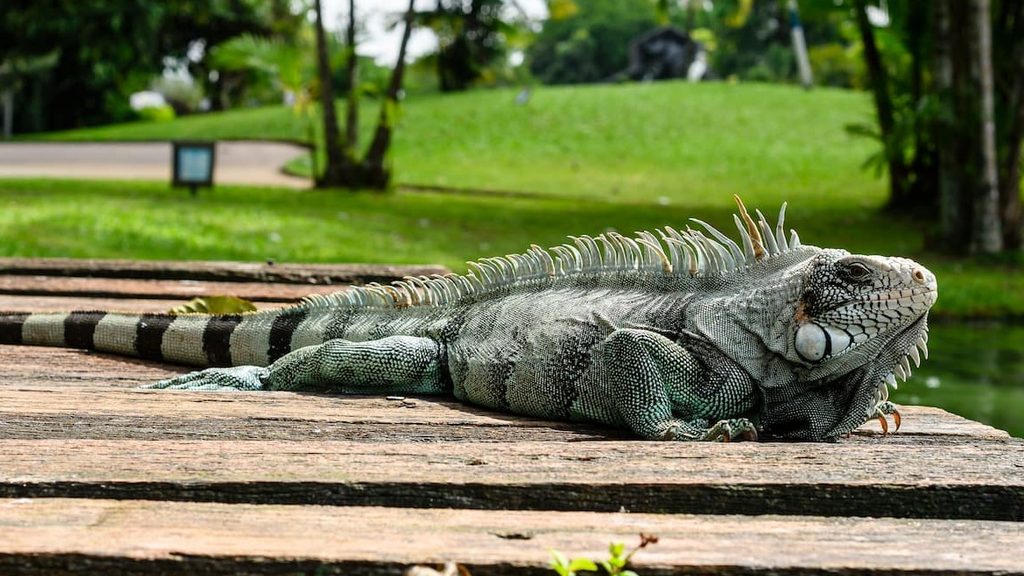
Most places get cold-weather warnings about frozen pipes. South Florida sometimes gets warnings about falling lizards.
During the major cold spell that hit the state in early February 2026, residents once again encountered cold-stunned green iguanas on lawns, sidewalks and beneath trees. CBS Miami reported photos and videos circulating across South Florida as immobilized reptiles fell from their perches.
This is not a Florida urban legend.
FWC explains that sustained near-freezing temperatures can put green iguanas into torpor, temporarily causing them to lose muscle control and sometimes fall from trees.
The agency also warns against taking a cold-stunned iguana indoors to warm it up. The animal may recover faster than expected and suddenly regain access to its teeth, claws and powerful tail.
So yes, the iguana on the lawn may look frozen. That does not make it a houseguest.
Peacocks Running the Neighborhood
Some Florida communities have squirrels.
Others apparently have a peacock committee.
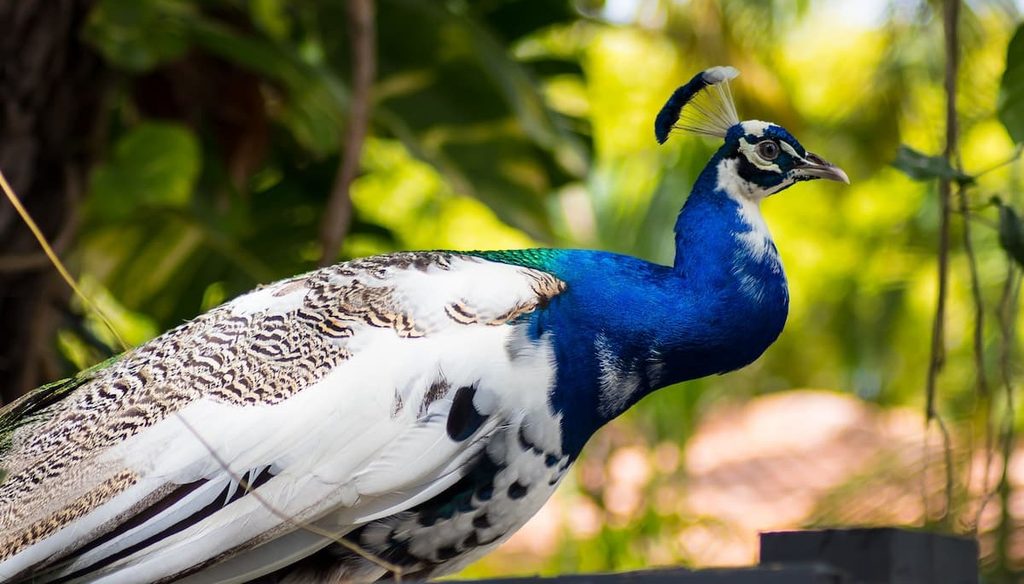
Residents of the Lost Lake subdivision in Casselberry told Spectrum News in August 2026 that roughly 10 to 15 peacocks had made themselves at home in the neighborhood.
The birds had been spotted around homes, streets and yards, with residents reporting everything from noise to property damage. The issue eventually became serious enough to reach local government, with Casselberry residents publicly debating the birds and the city’s sanctuary rules.
One mailbox in the community even carried a “Peacock Crossing” sign.
FWC says peafowl, chickens and other nonnative domestic birds have established populations in municipalities around Florida after escaping or being released.
In other words, seeing a peacock strolling past the recycling bin is strange.
It is also, in parts of Florida, apparently Tuesday.
Golf Carts Being Used Like Regular Cars
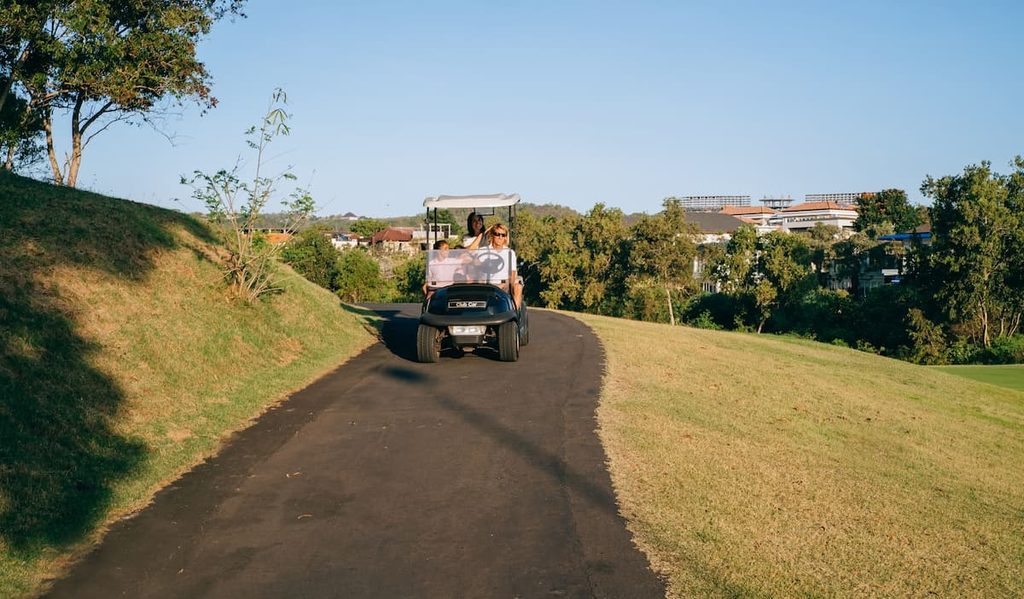
A golf cart on a golf course is unremarkable. A golf cart headed to the store, restaurant, community center or sheriff’s patrol assignment starts feeling a little more Florida.
Nowhere is that culture more visible than The Villages.
During a 2026 visit, ClickOrlando’s traffic reporter rode with the Sumter County Sheriff’s Office in one of the department’s marked golf carts.
The sheriff’s captain explained that for some residents, golf carts are not recreational vehicles at all. They are their main form of transportation, and some residents do not even own a traditional car.
That means a perfectly normal neighborhood traffic scene can involve SUVs, bicycles, pedestrians — and a line of golf carts.
Even outside The Villages, the vehicles are increasingly common. FOX 13 reported in 2026 on their growing everyday use on Florida streets.
Florida did not invent the golf cart. It may have perfected treating one like a second car.
Sandhill Cranes Holding up the Commute
Central Florida residents know the drill.
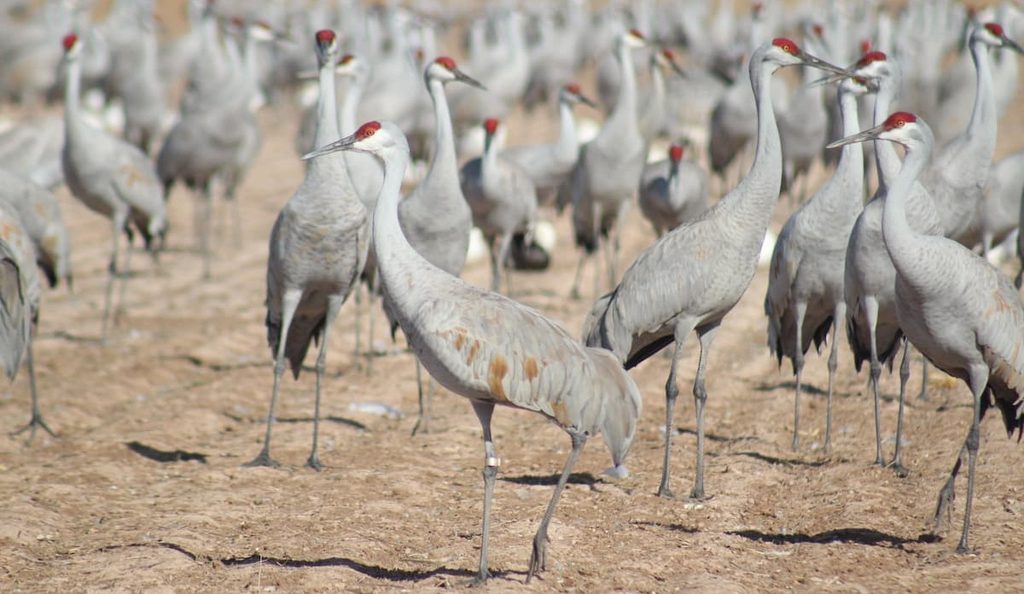
You are leaving for work. The coffee is in the cupholder. The clock is running. And a four-foot-tall bird has decided your street belongs to him now.
In a February 2026 discussion in Orlando’s Reddit community about where to see sandhill cranes, one resident supplied perhaps the most Florida answer possible: their front yard, where the birds squawk while they are trying to leave for work.
Others described cranes standing in driveways and in the middle of neighborhood streets.
That tracks with official wildlife guidance. FWC says Florida sandhill cranes are common in suburban subdivisions as well as golf courses and airports.
The agency also notes that cranes may peck shiny cars or windows after seeing their reflections.
And feeding them is illegal. The correct response to a crane blocking the commute is therefore patience — not attempting to negotiate right-of-way with a bird that is almost four feet tall and clearly has nowhere important to be.
Chickens Wandering Around Town
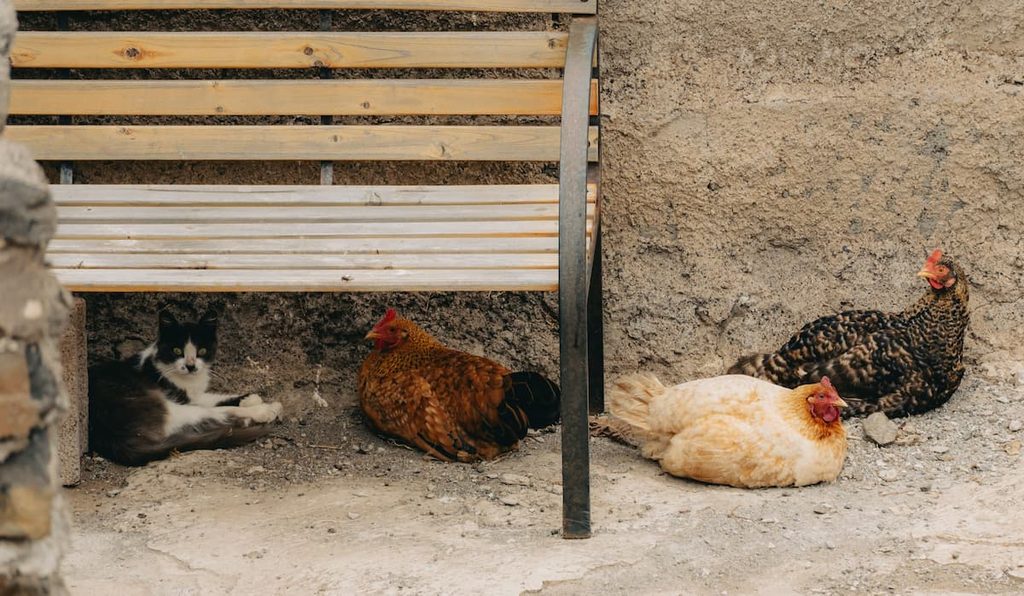
Key West has sunsets, roosters and an ongoing debate over just how many chickens is too many chickens.
The city’s free-roaming birds have been part of the island’s identity for years, but the issue returned to local government in late 2026 after officials began looking for a new way to deal with the population.
According to recent reporting on the city’s discussions, officials said the previous program had handled large numbers of chickens over the years, while commissioners heard continued concerns about birds roaming public areas.
For visitors, spotting a rooster crossing a Key West street can feel like part of the scenery. For residents, it can also mean crowing, traffic hazards and one more animal wandering around as though it pays property taxes.
Again, this is not limited entirely to the Keys. FWC says domesticated chickens and other fowl have become established in Florida municipalities after being released or escaping.
Florida’s answer to “Why did the chicken cross the road?” may simply be: because it lives here.
A Manatee Showing up at the Dock
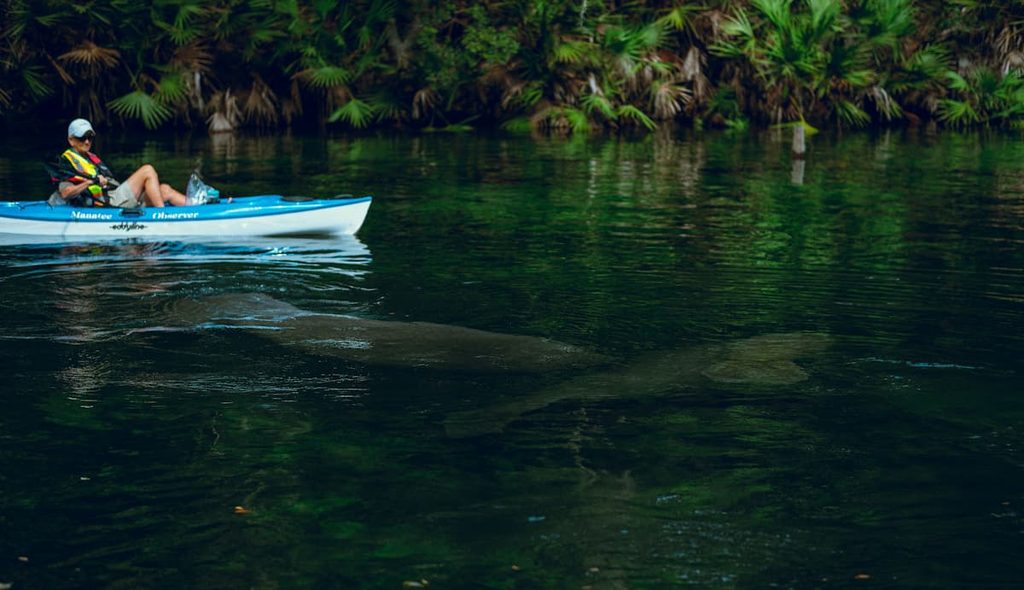
In waterfront Florida, sometimes the neighbor stopping by is approximately 1,000 pounds and lives underwater.
Bradenton police got such a visitor in April 2026 when a manatee appeared beside a police marine-unit boat at the dock.
Officers waited for the animal to move away before docking.
Manatees showing up around docks, seawalls and residential canals are entirely possible because FWC says the animals inhabit Florida rivers, bays, canals, estuaries and coastal waters.
There is an important rule when one does appear: enjoy the sight, but leave the animal alone.
FWC specifically says people should not feed manatees or give them fresh water, because getting them accustomed to humans, docks or boats can change their natural behavior and increase their risk of harm.
The manatee may look like it came over to say hello. Treat it as a wild neighbor who does not need refreshments.
A Bear Cub Ringing the Doorbell at 2 a.m.
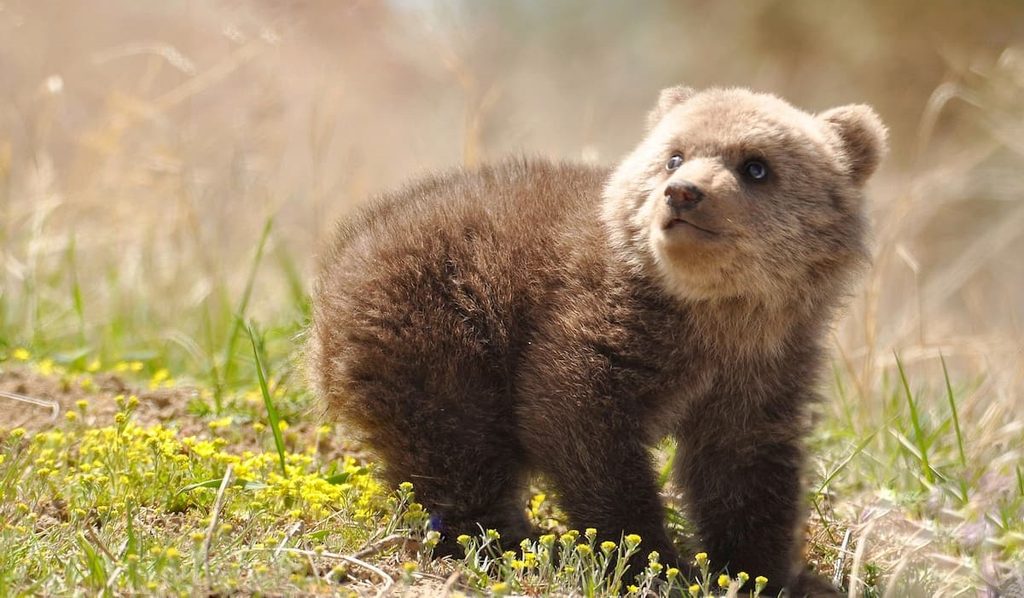
Most people hearing the doorbell at 2 in the morning would have questions. A Naples-area resident got a particularly unexpected answer.
In November 2026, a young Florida black bear was recorded sniffing and licking a home’s doorbell in the Riverstone community.
The resident told Gulf Coast News she initially wondered whether her husband was expecting somebody.
He was not. The bear apparently investigated the illuminated doorbell before moving along.
Funny video aside, black bears in Florida neighborhoods are something wildlife officials take seriously. FWC says bears are found throughout Florida and sometimes enter neighborhoods, especially when garbage, birdseed, pet food or other easy food sources are available.
The agency recommends securing attractants and giving bears plenty of space.
And if the doorbell rings in the middle of the night? Maybe check the camera before opening it.
Hurricane Preparation that Makes the Neighbors Stop and Stare
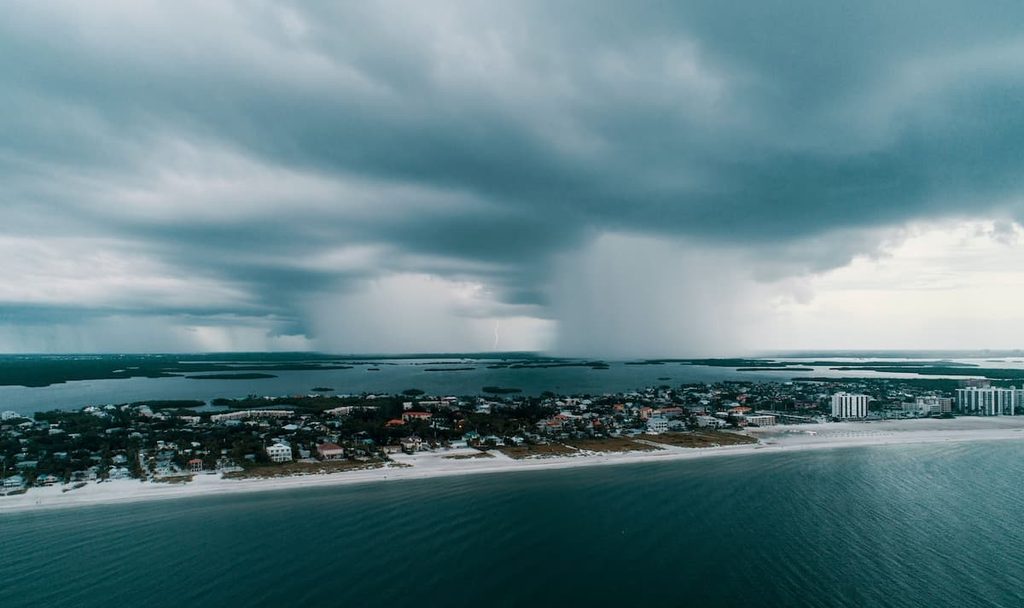
Nothing transforms a Florida neighborhood quite like the days before a hurricane.
Suddenly there is plywood over the windows, patio furniture has disappeared, gas cans are everywhere — and somebody down the street appears to be conducting an engineering experiment.
Before Hurricane Dorian in 2019, Action News Jax documented several unusually creative storm preparations.
One Ponte Vedra homeowner used heavy straps in an effort to secure his house, anchoring the setup to a Cadillac in the yard. Another St. Augustine-area homeowner wrapped parts of a home in plastic in an attempt to keep floodwater out.
A Jacksonville couple took an even more visually memorable approach: They moved a tiny Smart car inside their house rather than leave it exposed to the storm.
These experiments should not be confused with official hurricane-safety advice, and improvised protection is never a substitute for following evacuation orders and emergency guidance.
But anyone who has lived through hurricane preparation week in Florida knows the larger phenomenon.
Walk around the neighborhood before a storm and you may see plywood, tarps, sandbags, boats being moved, furniture disappearing into garages — and at least one thing that makes you ask:
“Is that actually going to work?”
That’s Florida.
A backyard pool can contain an alligator. A driveway can be occupied by cranes. The neighbor’s transportation might be a golf cart. Peacocks may have opinions about parked cars, and the late-night visitor at the door could turn out to have paws.
What is the strangest thing you have ever walked outside and seen in your Florida neighborhood?
