


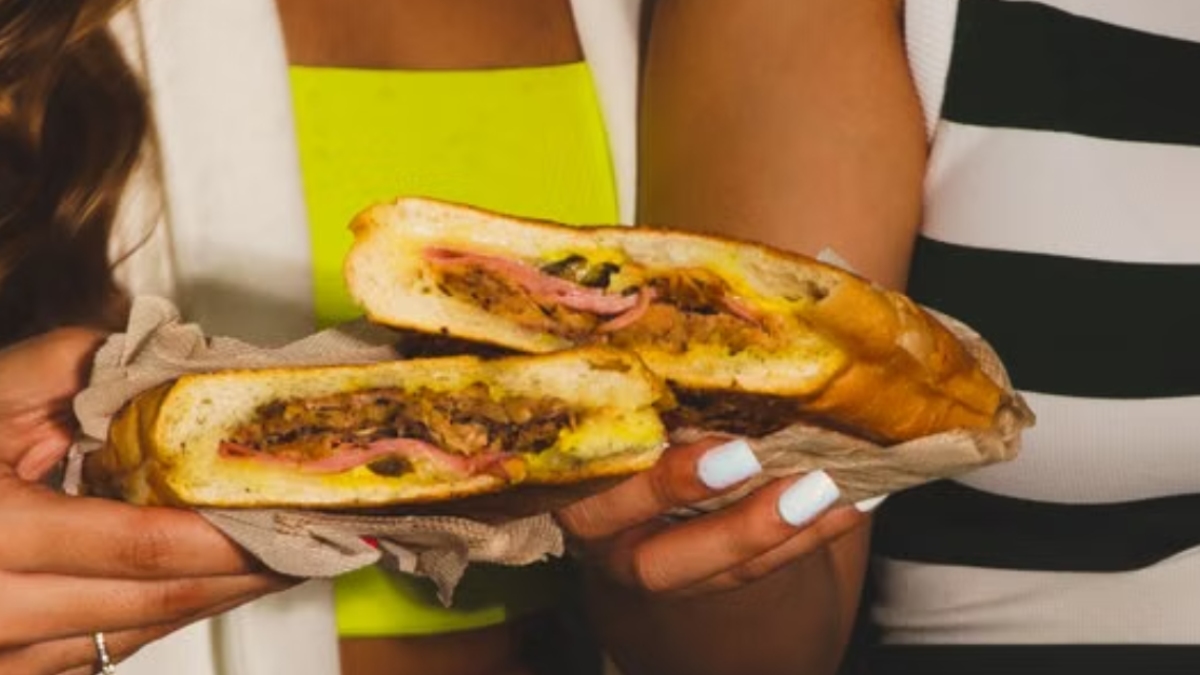
I used to think a Cuban sandwich was pretty straightforward. You put pork, ham, cheese, and pickles between two slices of bread, press it until everything warms up and tastes delicious, and call it lunch.
Then I started reading about Florida’s Cuban sandwich debate.
Apparently, I had underestimated how much disagreement could fit between two slices of bread. In particular, I had not expected salami to become a lesson in Florida history.
The argument is usually framed as Tampa versus Miami. Both cities have deep connections to Cuban culture, strong sandwich traditions, and reasons to feel protective of the food. The main point of disagreement is surprisingly specific: Tampa puts Genoa salami in its traditional Cuban sandwich. Miami generally does not.
That sounds like a small difference. It turns out to be connected to a much bigger story about immigration, memory, and local identity.
First, what actually goes into a Cuban sandwich?
The familiar version has roasted pork, ham, Swiss cheese, pickles, and yellow mustard, layered inside Cuban bread. The sandwich is pressed until the outside becomes crisp and the cheese softens.
Cuban bread matters, too. It is a long, relatively light loaf with a thin crust and soft interior. In Tampa, La Segunda Central Bakery has been making it since 1915, and its bread has become closely associated with the city’s sandwich tradition.
At first glance, there is not much to argue about. The ingredients seem straightforward enough.
Then Tampa adds salami.
Tampa has a very specific reason for that extra layer
Tampa’s claim is closely tied to Ybor City, the historic neighborhood that grew into a major cigar-manufacturing center in the late 19th century.
Cuban cigar workers were part of the community, but they were far from the only immigrants who shaped it. People from Spain, Italy, Germany, and elsewhere also settled there. Their cultures influenced the neighborhood’s food, businesses, and everyday life.
One widely cited account of the sandwich’s development connects its ingredients to that mix of communities: Spanish ham, Cuban-style roast pork, Italian Genoa salami, and Swiss cheese, pickles, and mustard associated with German and Jewish food traditions.
It is a neat explanation, although food historians caution against treating every ingredient’s supposed national origin as a perfectly documented fact.
The important point is that Tampa’s version reflects a community built through migration. The sandwich was not simply a Cuban recipe that arrived unchanged. It developed where different immigrant traditions met.
Tampa historians often trace the sandwich’s popularity to the late 1890s and early 1900s, when it became a practical meal for cigar workers. It was portable, filling, and suited to a busy working day.
In 2012, Tampa City Council officially designated the Historic Tampa Cuban Sandwich as the city’s signature sandwich. Its specified ingredients included Genoa salami.
So, for Tampa, removing the salami is not necessarily a harmless adjustment. It means changing a detail that has become part of the city’s food history.
Miami has its own claim, and it is not difficult to understand
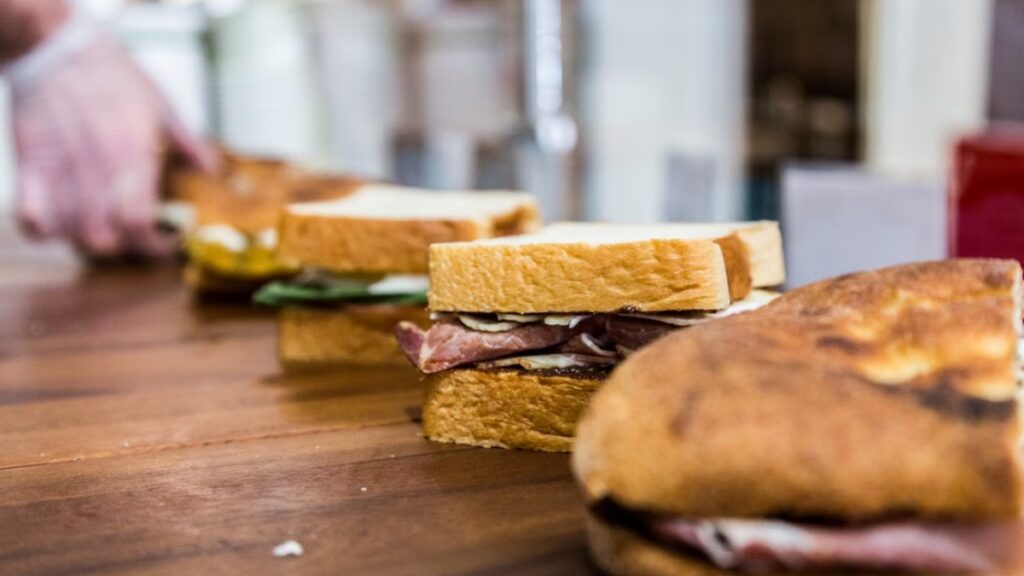
Miami’s relationship with the Cuban sandwich developed through a different chapter of Cuban-American history.
The city became a major center of Cuban exile and migration, particularly after the Cuban Revolution in 1959. Over the following decades, Cuban communities helped shape Miami’s neighborhoods, businesses, politics, and food culture.
The sandwich became part of that identity, too.
The Miami-style version generally sticks to the familiar combination of roast pork, ham, Swiss cheese, pickles, and mustard. Salami is usually left out. Miami doesn’t lack a Cuban sandwich tradition; rather, its version reflects a different understanding of what the sandwich should be.
And there is an interesting historical complication here. Research by University of South Florida historian Andy Huse and his co-authors found references to Cuban sandwiches, or mixtos, in 19th-century Havana. Their research also suggests that versions appeared in several Cuban exile communities, including Tampa, Key West, New Orleans, and New York.
In other words, the sandwich’s story does not begin neatly at the city limits of either Tampa or Miami.
The research gives Tampa considerable credit for popularizing the sandwich and preserving its distinctive bread tradition. It also credits Miami with helping establish the version that became widely recognized across the country.
That is a much more interesting history than a simple winner-and-loser argument.
It was never only about the salami
The more I read, the more the debate made sense.
Food is often one of the most visible ways communities preserve their history. Recipes travel with families. Ingredients change when people move. Restaurants become gathering places, and familiar meals can carry memories of neighborhoods that have changed dramatically over time.
That is especially true in Florida, where immigration has shaped so much of the state’s cultural identity.
For Tampa, the Cuban sandwich represents Ybor City’s multicultural past and the workers who helped build its cigar industry. For Miami, it belongs to a Cuban-American culture shaped by exile, migration, and the effort to preserve traditions far from home.
Neither connection is imaginary. Neither city needs to pretend the other has no history with the sandwich.
And perhaps that is why the argument can become so personal. Calling one version the only authentic Cuban sandwich can sound like dismissing the experiences of the people who grew up eating the other.
I still think of a Cuban sandwich as a pretty simple lunch. But I no longer think the story behind it is simple at all.
The salami may be the most obvious difference between Tampa and Miami, but it reminds us that food changes as people move, communities grow, and traditions develop.
Maybe the best way to settle the argument is not to settle it. Tampa can keep its salami, Miami can keep its version, and the rest of us can appreciate that Florida has two cities willing to defend a sandwich this passionately.
I had expected to learn what belongs between the bread. I ended up learning quite a bit about the people who put it there.
