


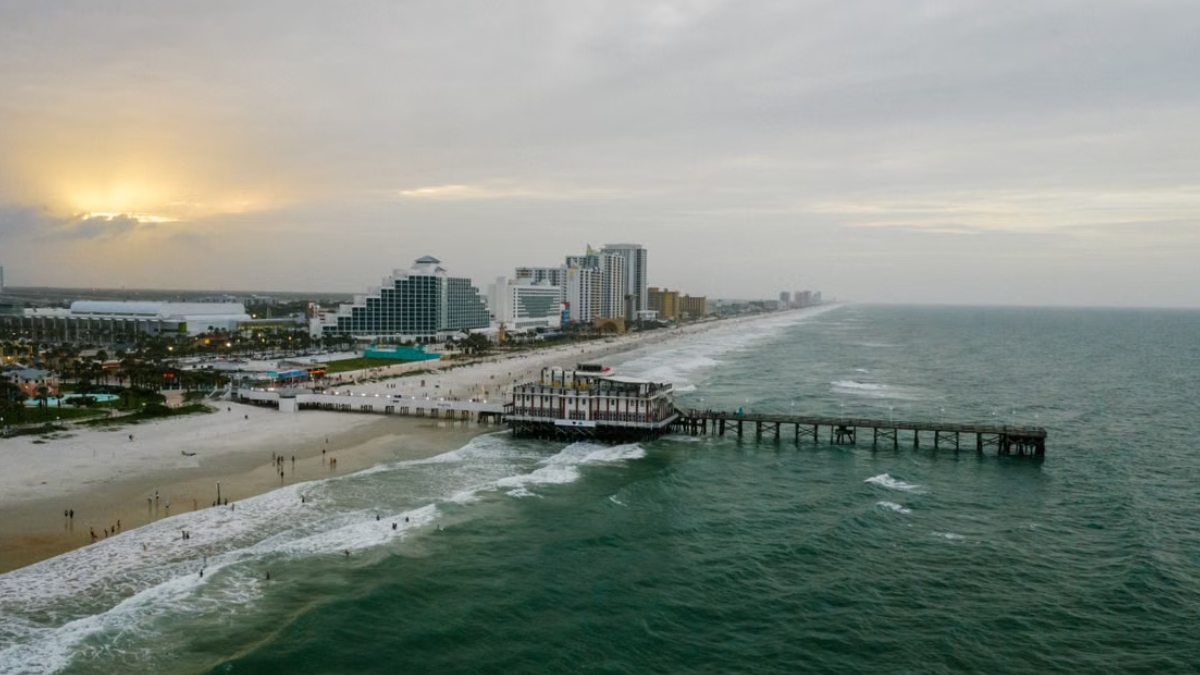
For a long time, I mentally filed Florida under “relatively affordable.”
The logic seemed obvious. Florida has no broad state personal income tax. Housing was historically cheaper than in places like New York, California, and much of the Northeast. Retirees could stretch savings further. Developers kept building sprawling subdivisions farther from expensive downtowns, and people spent decades moving here from higher-cost states.
Florida still officially imposes no personal income tax, according to the Florida Department of Revenue. That advantage is real. But the deeper I looked at the Florida cost of living in 2026, the harder it became to describe the state with one word like “cheap.”
Housing changed the equation
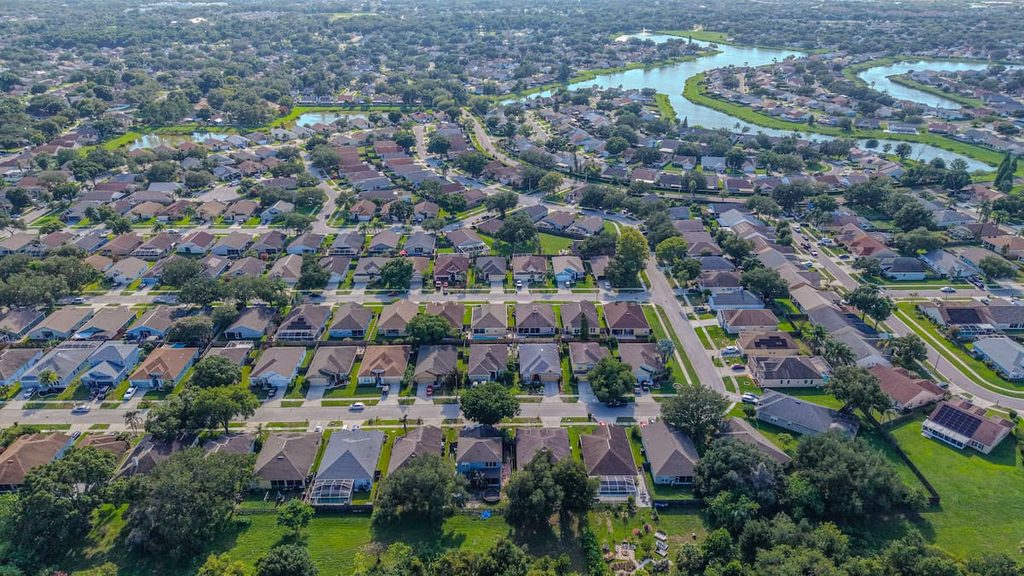
Start with the biggest household expense.
The statewide median sale price for an existing single-family home reached $420,000 in October 2026, according to Florida Realtors. That was 2.2% higher than a year earlier.
But even that number hides how dramatically Florida changes depending on the map.
Florida Realtors data covering August 2025 through July 2026 put the median sale price at roughly $620,000 in the Naples metro and $510,000 around Miami-Fort Lauderdale-West Palm Beach. Tampa was around $380,000, Jacksonville $374,000 and Orlando $410,000.
Then there was Ocala at roughly $280,000, Sebring at $267,000 and Lakeland-Winter Haven at $315,000.
That is not one housing market. It is several very different versions of Florida.
Rent tells a similar story. Zillow data cited in a 2026 housing analysis put typical August rents around $2,666 in Miami, compared with about $2,001 in Tampa and $1,942 in Orlando.
So someone leaving Miami for inland Florida can encounter a completely different affordability equation without ever crossing the state line.
Insurance is the cost I think outsiders underestimate

Housing prices are obvious. Insurance is easier to miss until someone actually owns a Florida house.
State insurance data show just how much location matters. Based on Florida Office of Insurance Regulation figures for March 2026, average homeowners premiums including wind coverage were about $5,975 in Miami-Dade County, $6,323 in Palm Beach County and $5,534 in Collier County, home to Naples.
At the other end, Sumter County’s average was about $2,105. These are averages, not quotes for a particular home, and coverage, construction, deductibles and location can change the number dramatically.
There has at least been some relief. An analysis of state regulatory data found the average annual premium among admitted owner-occupied homeowners policies at about $3,675 in the second quarter of 2026, slightly below its 2025 peak.
Car insurance adds another variable. Experian reported in November 2026 that Florida policies sold through its marketplace averaged about $2,012 annually, while full coverage averaged $2,723. Actual rates vary substantially by driver, vehicle and location.
Suddenly, the price on the real-estate listing is only part of the calculation.
No state income tax still matters

I don’t think it makes sense to dismiss Florida’s tax advantage just because other expenses have increased.
Florida’s lack of a personal income tax can make a meaningful difference, particularly for higher earners and households moving from states with substantial income taxes.
Property taxes are more complicated. They depend on local taxing authorities, assessed value and whether a homeowner qualifies for protections such as Florida’s Homestead Exemption and Save Our Homes assessment limitation.
That is exactly why two households earning the same amount can reach completely different conclusions about whether Florida saves them money.
But everyday costs add up

Florida isn’t unusually expensive in every category.
The latest Bureau of Economic Analysis regional price data provide a useful reality check. In 2024, Florida’s overall price level was about 3.4% above the national average. Yet the gap was enormous between metros: Miami-Fort Lauderdale-West Palm Beach was about 14% above the national level, while Jacksonville was slightly below it.
Utilities matter too, particularly when air conditioning becomes a near-year-round expense. The U.S. Energy Information Administration tracks Florida residential electricity prices, while drivers have another volatile expense at the pump. AAA’s Florida average for regular gasoline was about $3.56 a gallon on Nov. 17, 2026.
Groceries aren’t uniformly exploding, either. In Miami, the Bureau of Labor Statistics found grocery prices were essentially unchanged from August to October 2026, although restaurant food rose 1.6%.
Then some expenses rarely appear in simplistic state comparisons: tolls, HOA or condo fees, longer suburban drives and the cost of maintaining a car.
Florida wages don’t automatically erase those pressures. BLS data put statewide average weekly wages at $1,518 in the first quarter of 2026, below the national average of $1,654.
Florida is not one market
This may be the biggest thing I’ve changed my mind about.
Saying “Florida is expensive” is almost as misleading as saying “Florida is cheap.”
A renter in Miami, a mortgage-free retiree with a homesteaded house in Central Florida, a first-time buyer in Tampa and a remote worker buying in Ocala are participating in very different economies.
Migration data may even reflect some of that shifting math. Census-based estimates show Florida still gained population through migration in 2025, but net domestic migration fell sharply from 310,892 people in 2022 to just 22,517 in 2025. Researchers at the University of Florida also found growth increasingly shifting toward mid-sized counties such as Polk, Pasco and Marion.
People are still coming to Florida. Where they are choosing to live appears to matter more than ever.
So is Florida actually expensive?
I don’t think there is a clean yes-or-no answer anymore.
Florida can still work extremely well financially for someone benefiting from the lack of a state income tax, buying in a lower-cost inland market or already owning a home with favorable property-tax treatment.
For someone entering Miami or Naples housing prices today, paying coastal insurance premiums and depending on two cars, the calculation can look radically different.
That’s what changed my view.
Florida hasn’t simply gone from cheap to expensive. It has become a place where affordability depends much more heavily on where you live, what you earn, whether you rent or own, what you have to insure, and how you live.
The old shorthand that Florida is simply a cheap place to live increasingly feels outdated.
