



WEEKI WACHEE, Fla. — A child swimming in a Florida nature preserve was bitten by an alligator estimated to be up to 12 feet long before becoming stranded on a sandbar with several other juveniles, authorities said.
The Weeki Wachee alligator bite happened Monday afternoon at Weeki Wachee Preserve in Hernando County. The juvenile suffered puncture wounds to an arm and leg, but authorities said the injuries were not life-threatening.
Hernando County Fire Rescue’s Special Operations Marine Unit reached the stranded group by airboat and provided medical care before the injured child was taken to Bayonet Point Hospital, according to local reporting from the Hernando Sun.
The Hernando County Sheriff’s Office issued a blunt warning after the rescue.
“Do not swim in areas where swimming is prohibited,” the sheriff’s office said, according to a report from Tampa Bay 28.
Children Became Stranded on a Sandbar
Authorities were called to the preserve at about 2:30 p.m. after the child was bitten while swimming.
The victim and several other juveniles then became isolated on a sandbar and could not safely make it back to the mainland, according to the Hernando County Sheriff’s Office account cited by FOX 13 Tampa Bay.
Fire rescue crews used an airboat to reach the group.
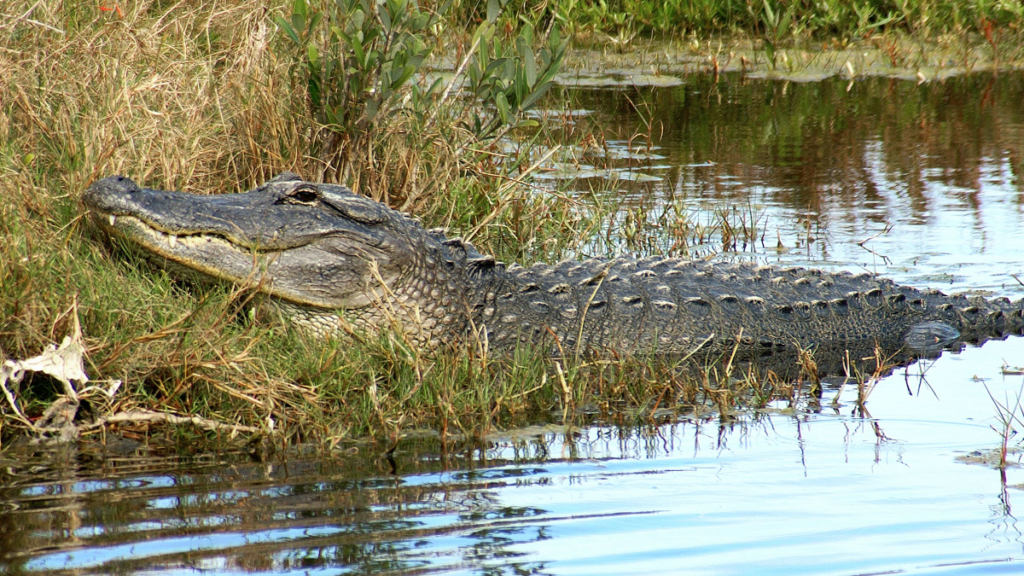
Officials estimated the alligator involved in the attack was between 9 and 12 feet long. A licensed Florida wildlife trapper responded and placed traps in an effort to locate the animal.
As of Tuesday’s reports, authorities had not announced whether the alligator had been captured.
The child’s name and exact age have not been released.
Swimming Is Prohibited in the Preserve’s Lakes
The incident is drawing particular attention because swimming is not allowed in the lakes at Weeki Wachee Preserve.
The Southwest Florida Water Management District’s official page for Weekiwachee Preserve lists hiking, bicycling, boating, fishing, hunting and other activities at the 11,206-acre property.
But its rules for the preserve’s limited-access areas are explicit: “No swimming allowed in any of the lakes.”
The Florida Fish and Wildlife Conservation Commission is investigating the circumstances surrounding the incident, including the reported swimming violation, authorities said.
The water management district has previously given the Hernando County Sheriff’s Office and FWC authority to warn, cite or arrest people engaging in activities that threaten public safety or welfare on certain district properties. Examples listed by the district include swimming or boating in nondesignated areas.
Details about that authority are available through the district’s Hernando County trespass authorization notice.
The investigation does not change the immediate reality of Monday’s rescue: a child was injured and several juveniles needed help getting safely out of the preserve.
Internet Users React: ‘That’s What Happens When You Don’t Obey Signs’
The attack quickly generated discussion online, with much of the reaction centering on the preserve’s swimming restrictions.
Comments on a WFLA social media post about the incident included criticism of people entering restricted water.
“Welp that’s what happens when you don’t obey signs,” one Instagram user wrote.
Others focused on a different issue: confusion between Weeki Wachee Preserve and the better-known Weeki Wachee River and springs, where visitors may be accustomed to seeing people in the water.
“The preserve is not the Weeki Wachee River!! Two different areas!!!” another commenter wrote.
That distinction is significant. Weeki Wachee is widely associated with kayaking, springs and water recreation, but the specific preserve where Monday’s incident occurred has its own restrictions.
Other online commenters described being wary of deeper water in the area or questioned why anyone would enter a lake where swimming is prohibited.
The reactions reflect a familiar Florida debate after alligator encounters: how much risk is unavoidable in a state filled with alligators, and how much can be reduced by following rules around waterways?
Alligators Live Across Florida
American alligators are found in all 67 Florida counties and inhabit lakes, rivers, ponds, marshes and other wetlands.
The Florida Fish and Wildlife Conservation Commission says serious injuries caused by alligators are rare, but conflicts can occur wherever people and alligators share waterways.
FWC advises people to swim only in designated swimming areas during daylight hours, keep a safe distance from alligators and never feed them.
Florida has an estimated 1.3 million alligators of all sizes, according to FWC safety guidance.
Anyone concerned about an alligator that may pose a threat to people, pets or property can contact FWC’s Nuisance Alligator Hotline at 866-FWC-GATOR (866-392-4286).
What Happens Next
FWC is continuing its investigation into the Weeki Wachee incident, including the alleged violation involving swimming in the preserve.
A wildlife trapper placed traps for the 9- to 12-foot alligator, but officials had not publicly confirmed its capture as of the latest reports Tuesday.
Authorities are also reminding visitors that Florida waterways can contain alligators whether one is visible or not.
For the Hernando County Sheriff’s Office, the immediate takeaway was simpler: use caution around the water, follow posted restrictions — and do not swim where swimming is prohibited.
