


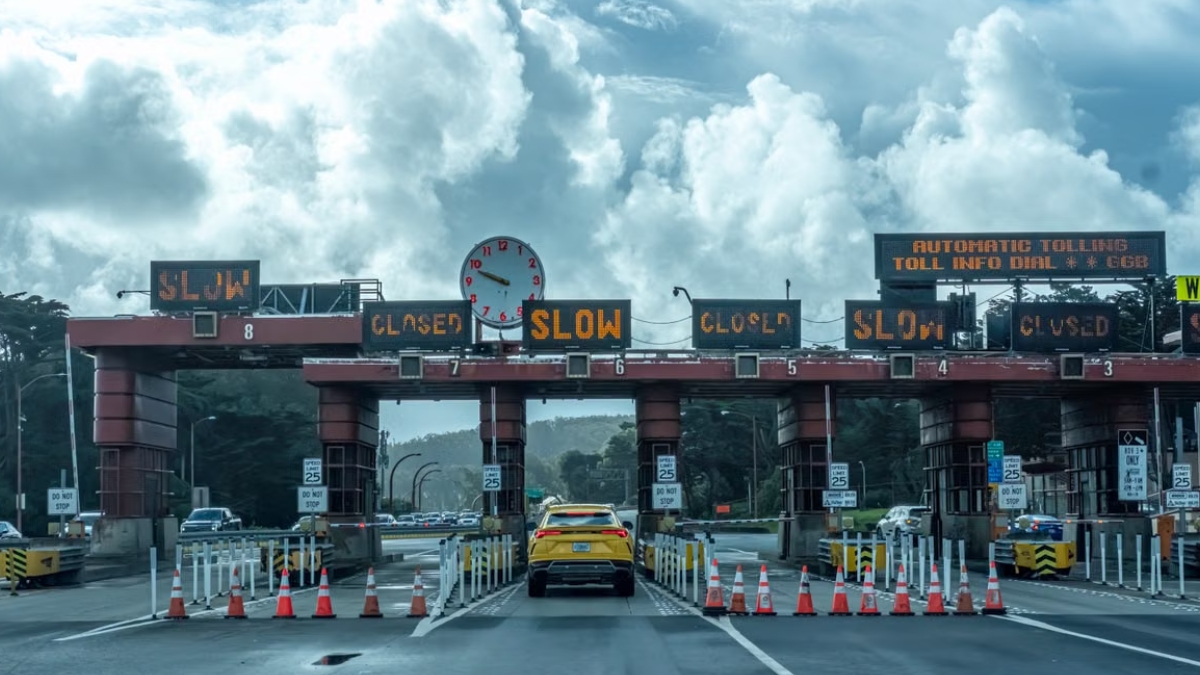
Florida toll roads can be simple once you know one rule: you usually do not need a SunPass to drive on a Florida toll road, but SunPass is generally the cheapest way to pay. Drivers without an accepted transponder can often use Toll-by-Plate, which photographs the vehicle’s license plate and bills the registered owner. Some roads and toll lanes are entirely cashless.
However, visitors driving rental cars need to pay extra attention. Rental companies generally handle plate-based tolls through their own toll programs, and the service fees depend on the rental agreement rather than Florida’s toll agency.
How do Florida toll roads work?
Florida uses several toll-payment systems. The main options are a prepaid transponder such as SunPass, license-plate billing through Toll-by-Plate, and cash where a particular toll facility still accepts it.
Electronic toll points use overhead equipment to read a transponder. If no accepted transponder is detected at a location offering Toll-by-Plate, cameras photograph the license plate, and the toll is billed to the vehicle’s registered owner.
Many Florida toll facilities are cashless, so drivers should not assume there will be a toll booth where they can stop and pay. Florida’s Turnpike Enterprise maintains information on electronic tolling and which payment methods are accepted.
Do I need SunPass in Florida?
No. A SunPass transponder is not required for ordinary travel on most Florida toll roads, but Florida’s Turnpike Enterprise says SunPass customers receive the lowest available toll rate and save an average of about 25% compared with cash and Toll-by-Plate customers.
There is an important exception: Toll-by-Plate cannot be used on Florida managed lanes. Drivers using those lanes must have SunPass or another accepted transponder.
SunPass offers two primary transponders:
- SunPass Mini: $4.99 plus tax.
- SunPass PRO: $14.95 plus tax.
Those prices were verified on September 15, 2026. Opening a private prepaid SunPass account requires a minimum initial balance of $10.
The Mini sticks permanently to a windshield, while the PRO is portable and can be moved between eligible vehicles. SunPass PRO also works where E-ZPass is accepted.
SunPass vs. Toll-by-Plate: Which payment method is better?
| Payment method | How it works | Typical cost difference | Best for |
|---|---|---|---|
| SunPass | Toll is deducted automatically from a prepaid account using a transponder | Lowest Florida toll rate; about 25% average savings versus cash/Toll-by-Plate | Residents and frequent visitors |
| Toll-by-Plate | Camera photographs the plate, and an invoice goes to the registered owner | Generally higher toll rate plus a $2.50 administrative charge per Toll Enforcement Invoice | Occasional drivers in their own vehicle |
| Rental-car toll program | Rental company or its vendor identifies tolls through the rental vehicle’s plate or equipment | Toll plus whatever service fees are specified in the rental contract | Visitors using rental cars |
| Cash | Driver pays at a staffed or coin toll location | Availability and rate depend on the facility | Only where cash is specifically accepted |
Fees checked September 15, 2026. Florida’s Turnpike says a Toll Enforcement Invoice includes a $2.50 administrative charge, while individual rental-car toll-program charges vary by company and agreement.
How does Toll-by-Plate work?
Toll-by-Plate is designed for drivers who use an eligible electronic toll facility without SunPass or another Florida-compatible transponder.
A camera records the plate, and Florida’s Turnpike says toll transactions incurred over a 30-day period may be included on a Toll Enforcement Invoice mailed to the registered owner. The invoice includes the tolls plus a $2.50 administrative charge.
Toll-by-Plate customers generally pay more than SunPass customers.
If you receive an invoice, you can review and pay it through the official SunPass system:
SunPass also provides an online option for drivers who recently passed through a toll location without paying and want to look up the toll before an invoice or citation arrives. That lookup requires the vehicle plate number and ZIP code registered to the vehicle.
What happens if I accidentally enter a Florida toll road?
Do not stop suddenly, reverse, or try to cross lanes to escape a toll point.
If you are driving your own vehicle without an active transponder and the location supports Toll-by-Plate, the system will generally photograph the plate and bill the registered owner.
You can also check SunPass’s official unpaid-toll payment system after the trip rather than waiting for an invoice.
If you were driving a rental car, however, do not expect the Toll-by-Plate invoice to come directly to you. The vehicle is registered to the rental company, and the rental company’s toll program normally handles the transaction.
How do rental car tolls work in Florida?
Rental car tolls are one of the most common sources of confusion for visitors.
Most major rental companies offer electronic toll programs. Toll cameras associate the rental vehicle’s license plate with the trip, and the rental company or a third-party vendor then charges the toll and any applicable service fees to the renter under the rental agreement.
There is no single statewide rental-car service fee. Each rental company and toll-program vendor sets its own terms, so check the agreement before leaving the rental lot rather than assuming you will pay only the posted toll.
Florida’s official SunPass rental-vehicle page includes current program information for participating rental companies.
Drivers who already own a portable SunPass can generally use it in a rental vehicle. SunPass instructs customers to add the rental vehicle’s license plate to their account and specify the beginning and ending dates of the rental. Remove the transponder when returning the vehicle.
Post-paid Toll-by-Plate is not normally available directly to a rental-car driver because the invoice goes to the vehicle’s registered owner — the rental company — rather than the renter.
What should visitors know about toll roads near Florida airports?
Toll roads are common around major Florida tourist and airport areas, so it is worth deciding how you will pay before driving away in a rental car.
Around Tampa International Airport, for example, the airport identifies several nearby or connecting toll facilities, including the Veterans Expressway, Suncoast Parkway, Sunshine Skyway Bridge and Florida’s Turnpike.
Miami International Airport’s rental-car driving directions also send motorists toward routes including State Roads 112 and 836, while airport guidance warns travelers heading through South Florida that parts of the Turnpike use electronic toll collection.
That makes the rental counter an important stop for one simple question: How will this vehicle’s tolls be charged, and what additional fees apply?
If you are using your own portable SunPass in a rental car, add the rental plate and rental dates to the account before relying on it.
Can I use an out-of-state transponder in Florida?
Possibly. Florida accepts several interoperable transponders.
Florida’s Turnpike says accepted electronic-toll options include SunPass, E-PASS, E-ZPass, LeeWay, NC Quick Pass and Peach Pass, along with several other systems on most Florida toll roads.
If you already have E-ZPass or another compatible account, you may not need to buy SunPass for a Florida trip.
One important precaution: SunPass recommends having only one active compatible transponder in the vehicle to reduce the possibility of duplicate toll charges.
What about an out-of-state license plate?
Out-of-state plates do not exempt a driver from Florida tolls.
If an eligible Toll-by-Plate location records the plate and no accepted transponder is detected, the tolling system can bill the vehicle’s registered owner. Drivers should make sure their vehicle registration address is current so notices are not sent to an old address.
Visitors with a compatible out-of-state toll transponder should confirm that their account is active, adequately funded, and linked to the correct plate before the trip.
Why did I get a Toll Enforcement Invoice even though I have SunPass?
Common causes listed by SunPass include:
- The vehicle’s license plate was not added to the SunPass account.
- The prepaid account did not have enough money.
- The payment card or bank information on file had changed or expired.
- The transponder was mounted incorrectly.
- The transponder was no longer working properly.
Keeping both the plate information and payment method current matters because toll equipment may use the plate as a backup when a transponder is not read correctly.
What happens if a Florida toll invoice is not paid?
Do not ignore a Toll Enforcement Invoice.
Florida’s Turnpike says an unpaid first invoice can lead to a second notice. SunPass states that missing the first invoice’s due date results in an additional $2.50 administrative charge on the second notice. If the balance remains unpaid, it may be referred to a collection agency, which can add further charges.
Florida may also place a registration stop on the registered owner’s license plate, preventing renewal until the qualifying outstanding balance is resolved. A Uniform Traffic Citation may also be issued in applicable cases.
One scam warning is also worth remembering: SunPass says official Toll Invoices are sent through U.S. Mail, not by email. SunPass.com is the official online payment site; TollByPlate.com redirects users there.
Common Florida toll-road mistakes to avoid
The easiest problems to prevent are also the most common: assuming every road accepts cash, driving a rental car without checking its toll policy, forgetting to add a rental plate to a SunPass account, leaving a portable transponder in a rental after returning it, or allowing a prepaid account to run out of funds.
Another mistake is assuming Toll-by-Plate is available everywhere. It cannot be used on Florida managed lanes, where an accepted transponder is required.
For rental vehicles, read the toll section of the agreement before driving. A small toll can become substantially more expensive when a rental company’s contractual service charge is added.
Florida toll roads FAQ
Is SunPass worth getting for a short Florida trip?
It depends on how much toll-road driving you expect to do. SunPass customers receive Florida’s lowest toll rates, while Toll-by-Plate is convenient for occasional trips in a privately owned vehicle. A SunPass Mini costs $4.99 plus tax, checked September 15, 2026.
Can tourists use Toll-by-Plate?
Yes, when driving their own vehicle on eligible Toll-by-Plate facilities. Rental vehicles are different because invoices go to the registered owner, so rental-company toll arrangements normally apply.
Can I pay a Florida toll after driving through it?
Yes. SunPass has an official online lookup allowing qualifying drivers to search for recent unpaid tolls before an invoice or citation is issued.
Do Florida toll roads take cash?
Some facilities may still accept cash, but many Florida tolling locations use all-electronic collection and do not. Check the route before traveling rather than relying on finding a cash booth.
Will my rental-car company automatically charge me for tolls?
Many rental companies use toll programs that can identify toll trips through the vehicle’s license plate, but the rules and service charges vary. Check the rental agreement for the specific program that applies to your vehicle.
What is the safest official website for Florida toll payments?
Use SunPass.com for SunPass accounts and Florida’s Turnpike Toll Enforcement Invoice payments. SunPass warns that official Toll Invoices are mailed rather than emailed.
The bottom line
For Florida residents who regularly use toll roads, SunPass is usually the simplest and least expensive option. Occasional drivers in their own vehicles can often rely on Toll-by-Plate, although they will generally pay a higher toll rate and a $2.50 administrative charge per Toll Enforcement Invoice.
Rental-car drivers should treat tolls differently: check the rental company’s program and fees before leaving the lot, or properly register a compatible portable transponder with the rental vehicle.
And if you enter a toll road by mistake, keep driving safely. Florida’s electronic systems are designed to record the trip without forcing drivers to stop in traffic.
All fees and policies in this guide were checked against official sources on November 11, 2026.
